Ditapis dengan
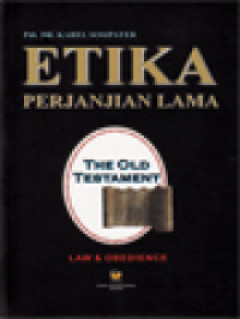
Etika Perjanjian Lama
Buku Etika Perjanjian Lama adalah buku langka yang ditulis oleh orang Indonesia. Yang mengungkapkan tentang etika moral dari tokoh-tokoh penting PL dalam keterikatan sejarah, dan memaparkan ajaran etika dan moral dari semua kitab PL. Ditulis secara Alkitabiah tanpa membahas soal kritik teks atau kritik historis dan sebagainya, yang membuat tulisan bertele-tele dan membosankan. Sehingga buku ini…
- Edisi
- -
- ISBN/ISSN
- 9786029512885
- Deskripsi Fisik
- 546 hlm
- Judul Seri
- -
- No. Panggil
- 241 SOS e
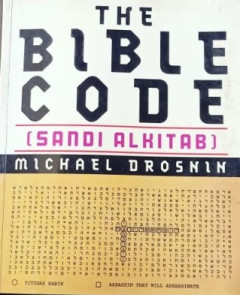
The Bible Code (Sandi Alkitab)
Catatan terperinci tentang setiap bab, catatan tentang semua ilustrasi dan cetak ulang tentang eksperimen asli yang membuktikan realita sandi alkitab, ditempatkan pada akhir buku ini.
- Edisi
- -
- ISBN/ISSN
- 05972450
- Deskripsi Fisik
- iv, 278 p.:il.;23 cm
- Judul Seri
- -
- No. Panggil
- 220.64 DRO t

The Dwelling of God : The Tabernacle in the Old Testament, Intertestamental J…
This study focuses on the role of the tabernacle in the earliest Christian sources, those of the NT. The task of this book is to discern what the tabernacle, rather than the temple, meant to early Christians, and why they used tabernacle imagery as they did. The results of this study are intended to contribute to a clearer understanding of a number of important NT texts and to a broader discuss…
- Edisi
- -
- ISBN/ISSN
- 0915170213
- Deskripsi Fisik
- 228 hlm
- Judul Seri
- -
- No. Panggil
- 220.64 KOE t
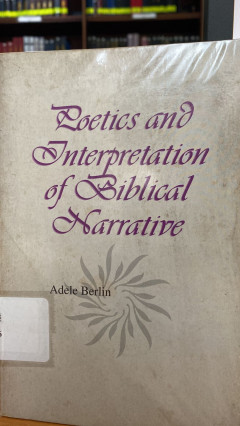
Poetics and Interpretation of Biblical Narrative
This classic work on literary criticism by Professor Adele Berlin introduces the reader to the colorful world of poetics (literary conventions) used in the construction of biblical narratives. Her book is divided into 6 parts: Poetics and Interpretation, Character and Characterization, Point of View, Poetics in the Book of Ruth, Poetic Interpretation and Historical-Critical Methods, and The Art…
- Edisi
- -
- ISBN/ISSN
- 0-931464-93-5
- Deskripsi Fisik
- 180 hlm
- Judul Seri
- -
- No. Panggil
- 220.66 BER p
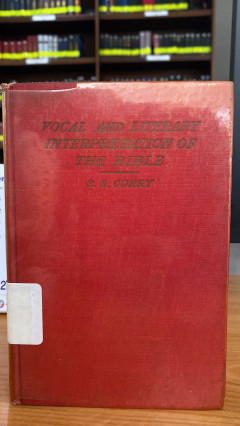
Vocal and Literary Interpretation of the Bible
The book is intended for serious study, and not for entertaiment. Accordingly, some repetitions have been necessary for example, there are a dozen kinds of monotony.
- Edisi
- -
- ISBN/ISSN
- -
- Deskripsi Fisik
- 384 hlm
- Judul Seri
- -
- No. Panggil
- 220.66 CUR v
The Changing Face of From Criticism for The Twenty-First Century
The approach to biblical interpretation known as "form criticism" has changed markedly at the beginning of the twenty-first century. Front-ranking experts here survey the contemporary landscape of form criticism and explore significant patterns and trends now emerging in the field. Together these essays point to the continuing dynamism and vitality of form-critical theory as a significant tool …
- Edisi
- -
- ISBN/ISSN
- 0802860672
- Deskripsi Fisik
- 6 x 1 x 9 inches
- Judul Seri
- -
- No. Panggil
- 220.663 SWE t
Is The Bible Fact or Fiction? An Introduction to Biblical Historiography
Even considering such questions alerts the modern reader to the limitations of ancient history, as well as to the great distance of time, culture, and language, between the biblical writer and the current reader. IS THE BIBLE FACT OR FICTION? invites the reader to look at the "historical books" of the Bible, not from the standpoint of what actually happened, but to understand the type of histor…
- Edisi
- -
- ISBN/ISSN
- 0809142368
- Deskripsi Fisik
- 6.08 x 0.47 x 8.88 inches
- Judul Seri
- -
- No. Panggil
- 220.67 ORG i
Anthropological Approaches to the Interpretation of the Bible
The general aim of this book is to introduce anthropological approaches to the interpretation of the Bible. The Bible is a collection og the books taht can be studied from several angles.
- Edisi
- -
- ISBN/ISSN
- 0-8267-0458-1
- Deskripsi Fisik
- 118 hlm
- Judul Seri
- -
- No. Panggil
- 220.67 JAG a
Menafsir Alkitab Secara Praktis
Bagi orang Kristen, Alkitab dapat diibaratkan sebagai "Kompas" yang menyertai perjalanan iman mereka. Alkitab berfungsi sebagai penuntun jalan agar tidak tersesat atau salah melangkah. Demikianlah pentingnya keberadaan Alkitab dalam kehidupan Iman Kristen. Namun demikian, ternyata tidak mudah untuk membaca Alkitab. Sering kali Alkitab menjadi sangat sukar untuk dipahami, apalagi bila harus dib…
- Edisi
- -
- ISBN/ISSN
- 9789794152331
- Deskripsi Fisik
- v, 77 hlm. : 21x14
- Judul Seri
- -
- No. Panggil
- 220.7 GAR m

The Cambridge Greek Testament commentary (The Epistles to the Colossiang and …
This is a theological commentary on the Greek text
- Edisi
- -
- ISBN/ISSN
- 521 09236 1
- Deskripsi Fisik
- 169 hlm
- Judul Seri
- -
- No. Panggil
- 220.7 MOU t
 Alkitab & PB LAI
  Alkitab & PB Non LAI
  Majalah & Buletin
  Porsion
  Seleksion
  Koleksi Anak
  Umum
Umum  Jurnal
  Konkordansi
  Altutang
  Encyclopedia
  Kamus
Kamus  Teologi dan Tafsiran