Ditapis dengan

Pedoman Penafsiran Alkitab Surat Paulus yang Kedua kepada Jemaat di Korintus
Buku ini adalah hasil adaptasi dari buku aslinya yang berjudul A Translator's Handbook on the Gospel Of Matthew yang di terbitkan oleh Perserikatan Lembaga-Lembaga Alkitab Indonesia Sedunia (United Bible Societies-UBS-) Tujuan utama penerbitan buku inilah untuk membantu para penerjemah melakukan tugas mereka sebaik- baiknya. Yang paling penting bagi seorang penerjemah adalah eksegis. Itulah y…
- Edisi
- -
- ISBN/ISSN
- 978-979-463-003-7
- Deskripsi Fisik
- 308 hlm
- Judul Seri
- -
- No. Panggil
- 227.3 OMA k

Pedoman Penafsiran Alkitab Surat - Surat Paulus kepada Timotius dan Kepada Titus
Buku ini adalah hasil adaptasi dari buku aslinya yang berjudul A Translator's Handbook on the Gospel Of Matthew yang di terbitkan oleh Perserikatan Lembaga-Lembaga Alkitab Indonesia Sedunia (United Bible Societies-UBS-) Tujuan utama penerbitan buku inilah untuk membantu para penerjemah melakukan tugas mereka sebaik- baiknya. Yang paling penting bagi seorang penerjemah adalah eksegis. Itulah y…
- Edisi
- -
- ISBN/ISSN
- 979-463-595-2
- Deskripsi Fisik
- 328 hlm
- Judul Seri
- -
- No. Panggil
- 227.84-85 ARI s

Pedoman Penafsiran Alkitab Surat Paulus kepada Jemaat di Galatia
Buku ini adalah hasil adaptasi dari buku aslinya yang berjudul A Translator's Handbook on the Gospel Of Matthew yang di terbitkan oleh Perserikatan Lembaga-Lembaga Alkitab Indonesia Sedunia (United Bible Societies-UBS-) Tujuan utama penerbitan buku inilah untuk membantu para penerjemah melakukan tugas mereka sebaik- baiknya. Yang paling penting bagi seorang penerjemah adalah eksegis. Itulah y…
- Edisi
- -
- ISBN/ISSN
- 978-979-463-739-5
- Deskripsi Fisik
- 178 hlm
- Judul Seri
- -
- No. Panggil
- 227.4 ARI s
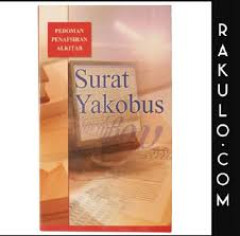
Pedoman Penafsiran Alkitab Surat Yakobus
Buku ini adalah hasil adaptasi dari buku aslinya yang berjudul A Translator's Handbook on the Gospel Of Matthew yang di terbitkan oleh Perserikatan Lembaga-Lembaga Alkitab Indonesia Sedunia (United Bible Societies-UBS-) Tujuan utama penerbitan buku inilah untuk membantu para penerjemah melakukan tugas mereka sebaik- baiknya. Yang paling penting bagi seorang penerjemah adalah eksegis. Itulah y…
- Edisi
- -
- ISBN/ISSN
- 978-979-463-831-6
- Deskripsi Fisik
- 190 hlm
- Judul Seri
- -
- No. Panggil
- 227.91 JIN s
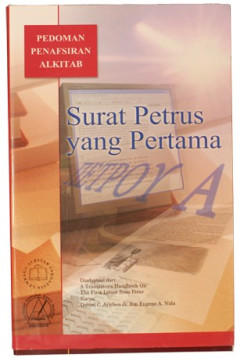
Pedoman Penafsiran Alkitab Surat Petrus yang Pertama
Buku ini adalah hasil adaptasi dari buku aslinya yang berjudul A Translator's Handbook on the Gospel Of Matthew yang di terbitkan oleh Perserikatan Lembaga-Lembaga Alkitab Indonesia Sedunia (United Bible Societies-UBS-) Tujuan utama penerbitan buku inilah untuk membantu para penerjemah melakukan tugas mereka sebaik- baiknya. Yang paling penting bagi seorang penerjemah adalah eksegis. Itulah y…
- Edisi
- -
- ISBN/ISSN
- 978-979-463-629-9
- Deskripsi Fisik
- 195 hlm
- Judul Seri
- -
- No. Panggil
- 227.92 ARI s
Pedoman Penafsiran Alkitab Wahyu kepada Yohanes
Buku ini adalah hasil adaptasi dari buku aslinya yang berjudul A Translator's Handbook on the Gospel Of Matthew yang di terbitkan oleh Perserikatan Lembaga-Lembaga Alkitab Indonesia Sedunia (United Bible Societies-UBS-) Tujuan utama penerbitan buku inilah untuk membantu para penerjemah melakukan tugas mereka sebaik- baiknya. Yang paling penting bagi seorang penerjemah adalah eksegis. Itulah y…
- Edisi
- -
- ISBN/ISSN
- 463-1203-S
- Deskripsi Fisik
- 355 hlm
- Judul Seri
- -
- No. Panggil
- 228 BRA W
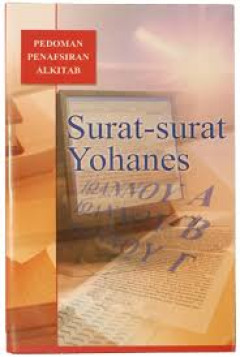
Pedoman Penafsiran Alkitab Surat - Surat Yohanes
Buku ini adalah hasil adaptasi dari buku aslinya yang berjudul A Translator's Handbook on the Gospel Of Matthew yang di terbitkan oleh Perserikatan Lembaga-Lembaga Alkitab Indonesia Sedunia (United Bible Societies-UBS-) Tujuan utama penerbitan buku inilah untuk membantu para penerjemah melakukan tugas mereka sebaik- baiknya. Yang paling penting bagi seorang penerjemah adalah eksegis. Itulah y…
- Edisi
- -
- ISBN/ISSN
- 978-979-463-363-2
- Deskripsi Fisik
- 232 hlm
- Judul Seri
- -
- No. Panggil
- 227.94.96 JON s

Pedoman Penafsiran Alkitab Surat - Surat Paulus kepada Jemaat di Tesalonika
Buku ini adalah hasil adaptasi dari buku aslinya yang berjudul A Translator's Handbook on the Gospel Of Matthew yang di terbitkan oleh Perserikatan Lembaga-Lembaga Alkitab Indonesia Sedunia (United Bible Societies-UBS-) Tujuan utama penerbitan buku inilah untuk membantu para penerjemah melakukan tugas mereka sebaik- baiknya. Yang paling penting bagi seorang penerjemah adalah eksegis. Itulah y…
- Edisi
- -
- ISBN/ISSN
- 979-463-573-1
- Deskripsi Fisik
- 144 hlm
- Judul Seri
- -
- No. Panggil
- 227.81-82 ELL e

Pedoman Penafsiran Alkitab Surat Paulus Kepada Jemaat dI Kolose dan Kepada Fi…
Buku ini adalah hasil adaptasi dari buku aslinya yang berjudul A Translator's Handbook on the Gospel Of Matthew yang di terbitkan oleh Perserikatan Lembaga-Lembaga Alkitab Indonesia Sedunia (United Bible Societies-UBS-) Tujuan utama penerbitan buku inilah untuk membantu para penerjemah melakukan tugas mereka sebaik- baiknya. Yang paling penting bagi seorang penerjemah adalah eksegis. Itulah y…
- Edisi
- -
- ISBN/ISSN
- -
- Deskripsi Fisik
- 166 hlm
- Judul Seri
- -
- No. Panggil
- 227.7 ,86

Pedoman Penafsiran Alkitab Surat Paulus kepada Jemaat di Efesus
Buku ini adalah hasil adaptasi dari buku aslinya yang berjudul A Translator's Handbook on the Gospel Of Matthew yang di terbitkan oleh Perserikatan Lembaga-Lembaga Alkitab Indonesia Sedunia (United Bible Societies-UBS-) Tujuan utama penerbitan buku inilah untuk membantu para penerjemah melakukan tugas mereka sebaik- baiknya. Yang paling penting bagi seorang penerjemah adalah eksegis. Itulah y…
- Edisi
- -
- ISBN/ISSN
- 978-979-463-001-3
- Deskripsi Fisik
- 187 hlm
- Judul Seri
- -
- No. Panggil
- 227.5 BRA s
 Alkitab & PB LAI
  Alkitab & PB Non LAI
  Majalah & Buletin
  Porsion
  Seleksion
  Koleksi Anak
  Umum
Umum  Jurnal
  Konkordansi
  Altutang
  Encyclopedia
  Kamus
Kamus  Teologi dan Tafsiran