Ditapis dengan
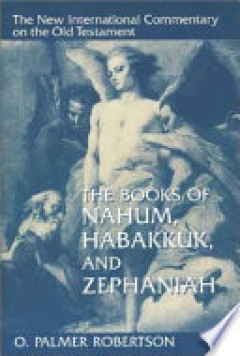
(NICOT) The Books of Nahum, Habakuk and Zephaniah
Robertson's study of the Books of Nahum, Habakkuk, and Zephaniah is a contribution to The New International Commentalry on the Old Testament, a commentary which strives to achieve a balance between technical information and homiletic-devotional interpretation. The commentary proper is based on the author's own translation of the Hebrew text.
- Edisi
- -
- ISBN/ISSN
- 9780802825322
- Deskripsi Fisik
- 224.9 ROB n - 1
- Judul Seri
- -
- No. Panggil
- 13
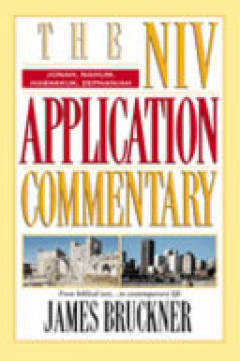
The NIV Application Commentary: Jonah, Nahum, Habakuk, Zephaniah
The prophetic books Jonah, Nahum, Habakkuk, and Zephaniah are brief but powerful. They comfort us with the assurance that, when nothing in this life makes sense, God is still in control. They toughen our faith in the face of the world's ugly realities. And they reveal the complexities of humans in relation to God. Jonah ran from his divine commission. Habakkuk questioned God concerning his ways…
- Edisi
- -
- ISBN/ISSN
- 9780310206378
- Deskripsi Fisik
- 224.94 BRU j - 1
- Judul Seri
- -
- No. Panggil
- 13
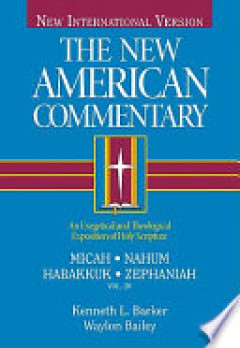
The New American Commentary (NAC) Vol. 20 - Micah, Nahum, Habakuk, Zephaniah
- Edisi
- -
- ISBN/ISSN
- 9780805401202
- Deskripsi Fisik
- 224.9 BAK n - 1
- Judul Seri
- -
- No. Panggil
- 13
- Edisi
- -
- ISBN/ISSN
- 9780805401202
- Deskripsi Fisik
- 224.9 BAK n - 1
- Judul Seri
- -
- No. Panggil
- 13
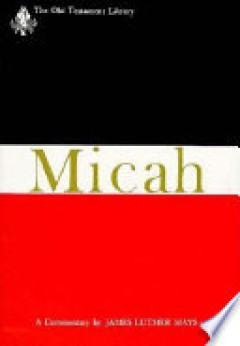
The Old Testament Library Micah
This much-needed commentary provides an authoritative guide to a better understanding of the often-neglected book of Micah. If gives insight into the individual sayings of Micah, to the way they were understood and used as they were gathered into the growing collection, and to their role in the final form of the document. "I am convinced," says Dr. Mays, that Micah "is not just a collection of …
- Edisi
- -
- ISBN/ISSN
- 0664208177
- Deskripsi Fisik
- 224.9 MAY m - 1
- Judul Seri
- -
- No. Panggil
- 13

Micah a Commentary
"Wolff's commentary on Micah is one of the most thorough works available in English. His insightful observations on the message of the prophet make this book a standard commentary on Micah for years to come. It is highly recommended to scholars, ministers, and theological students as an indispensable aid"--Publisher description.
- Edisi
- -
- ISBN/ISSN
- 0806624493
- Deskripsi Fisik
- 224.93 WOL m - 1
- Judul Seri
- -
- No. Panggil
- 13

Auxiliaires Du Traducteur: Manuel Du Traducteur Pour Les Livres D'abdias Et D…
- Edisi
- -
- ISBN/ISSN
- 285300788X
- Deskripsi Fisik
- 224.93 CLA m - 1
- Judul Seri
- -
- No. Panggil
- 13
- Edisi
- -
- ISBN/ISSN
- 285300788X
- Deskripsi Fisik
- 224.93 CLA m - 1
- Judul Seri
- -
- No. Panggil
- 13
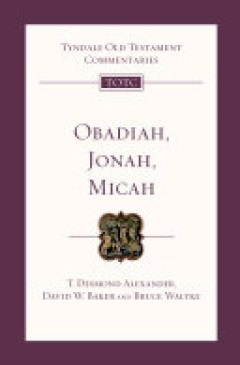
Tyndale Old Testament Commentaries (TOTC) Vol. 26 - Obadiah, Jonah and Micah
Obadiah's oracle. Jonah's mission. Micah's message. Alexander, Baker and Waltke takes a fresh, penetrating look at three minor but important prophets. They consider the historical setting, structure, authorship and major themes of each book, and then provide a passage-by-passage exposition of each.
- Edisi
- -
- ISBN/ISSN
- 9780830842261
- Deskripsi Fisik
- 224.9 BAK o - 1
- Judul Seri
- -
- No. Panggil
- 13
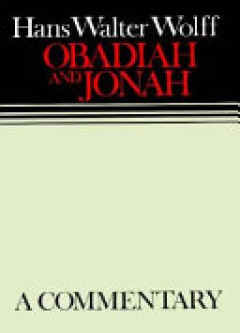
Obadiah and Jonah a Commentary
Professor Wolff's clear and thorough orientation to the collection of oracles in the book of Obadiah and to the narrative art of the book of Jonah. Differently, both prophets provide an answer to what the interaction is between the whole of humanity God has createdand His people in particular.
- Edisi
- -
- ISBN/ISSN
- 9780800695118
- Deskripsi Fisik
- 224.9 WOL o - 1
- Judul Seri
- -
- No. Panggil
- 13
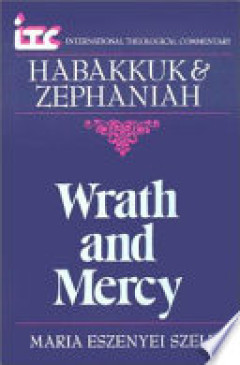
International Theological Commentary Habakuk & Zephaniah
Neither Habakkuk nor Zephaniah is very well known or understood by our generation. These Old Testament prophets, who were contemporary with Jeremiah, interpreted events leading up to the total destruction of Jerusalem by Nebuchadnezzar, the Babylonian "king of kings and lord of lords," in 597 and 587 B.C.
- Edisi
- -
- ISBN/ISSN
- 0802802427
- Deskripsi Fisik
- 224.9 SZE h - 1
- Judul Seri
- -
- No. Panggil
- 13
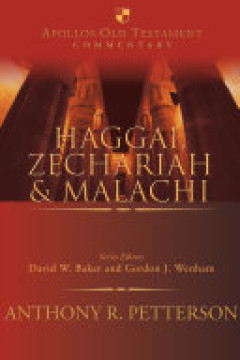
( AOTC) Apollos Old Testament Commentary Haggai, Zechariah & Malachi
In this Apollos Old Testament Commentary, Anthony Petterson offers detailed commentary on the prophetic books of Haggai, Zechariah and Malachi, setting them in their wider biblical-theological context. He shows the connections between the post-exilic world and our own, and explains how these books contain a vital message for the church today, living in the gap between promise and reality.
- Edisi
- -
- ISBN/ISSN
- 9780830825240
- Deskripsi Fisik
- 224.9 PET a - 1
- Judul Seri
- -
- No. Panggil
- 13
 Alkitab & PB LAI
  Alkitab & PB Non LAI
  Majalah & Buletin
  Porsion
  Seleksion
  Koleksi Anak
  Umum
Umum  Jurnal
  Konkordansi
  Altutang
  Encyclopedia
  Kamus
Kamus  Teologi dan Tafsiran